A teepee is one of the most rewarding weekend builds a parent or crafter can take on: a few poles, a length of fabric, and an afternoon later you've got a cozy play tent, a reading nook, or a backyard hideaway the kids will disappear into for hours. The classic cone shape is also forgiving to build — there's no precise joinery, no complicated pattern, and most versions come together with materials you already have in the garage. This collection gathers 48 DIY teepee plans, grouped by style and skill, from five-minute no-sew play tents to sturdy wooden frames, nursery corners, and garden plant supports. Pick the one that fits your space and your toolbox, and start building.
Every teepee is really the same idea — poles gathered and tied at the top, splayed into a cone at the bottom, and wrapped or left open — so once you understand the frame, you can adapt any of these to the size and materials you have. Below, the plans are sorted by where they live and how they're built, with honest notes on which are truly no-sew and which need a drill.
No-sew dowel & drop-cloth teepees
The fastest, friendliest builds on the list. A handful of wooden dowels lashed at the top and a canvas drop cloth or old sheet wrapped around them — no sewing machine, no power tools, just rope and fabric.
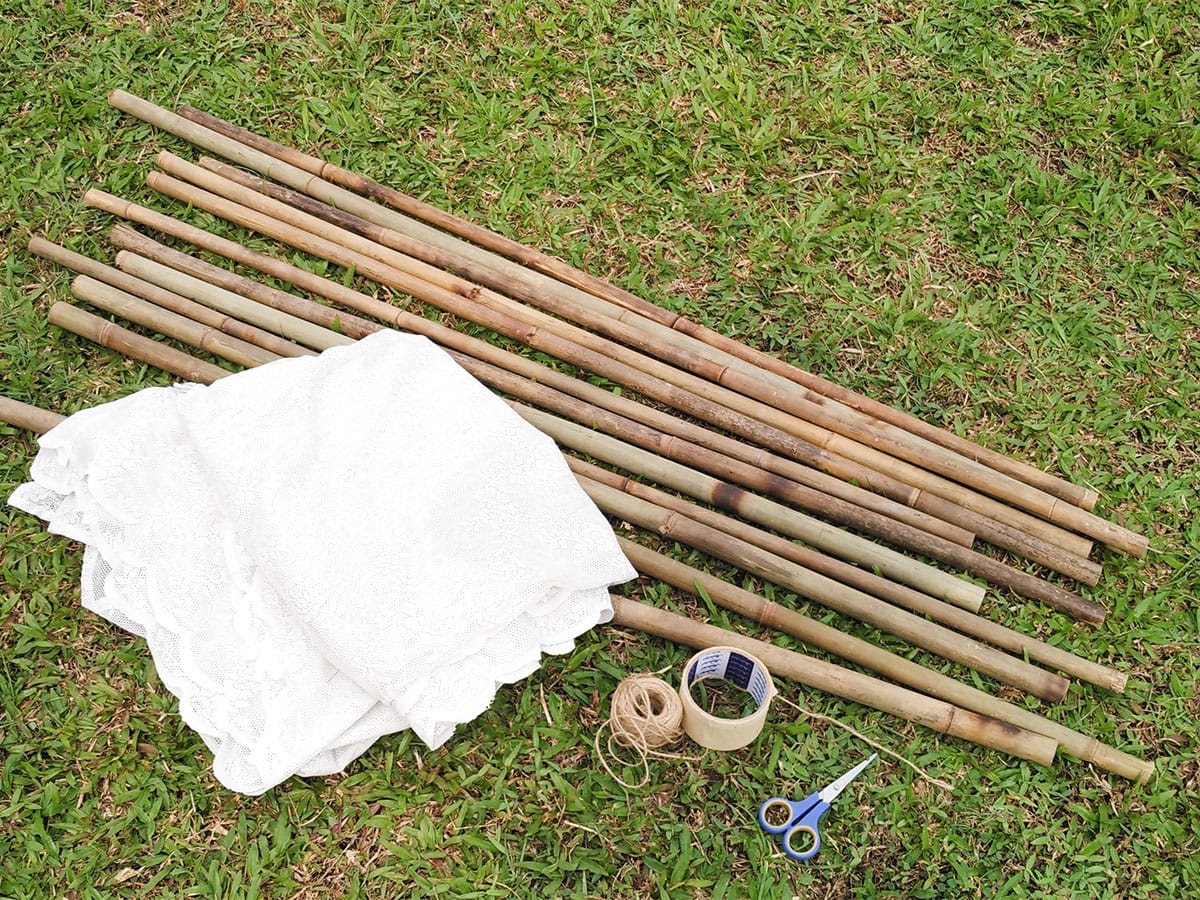
The Basic Dowel Kit. The starting point for most no-sew teepees: five or six 6-foot wooden dowels or garden stakes, a length of rope or twine to lash the top, and a canvas drop cloth for the cover. Bundle the poles, tie them a foot from the top, splay the bottoms into a circle, and drape the fabric — the whole frame goes up in minutes.
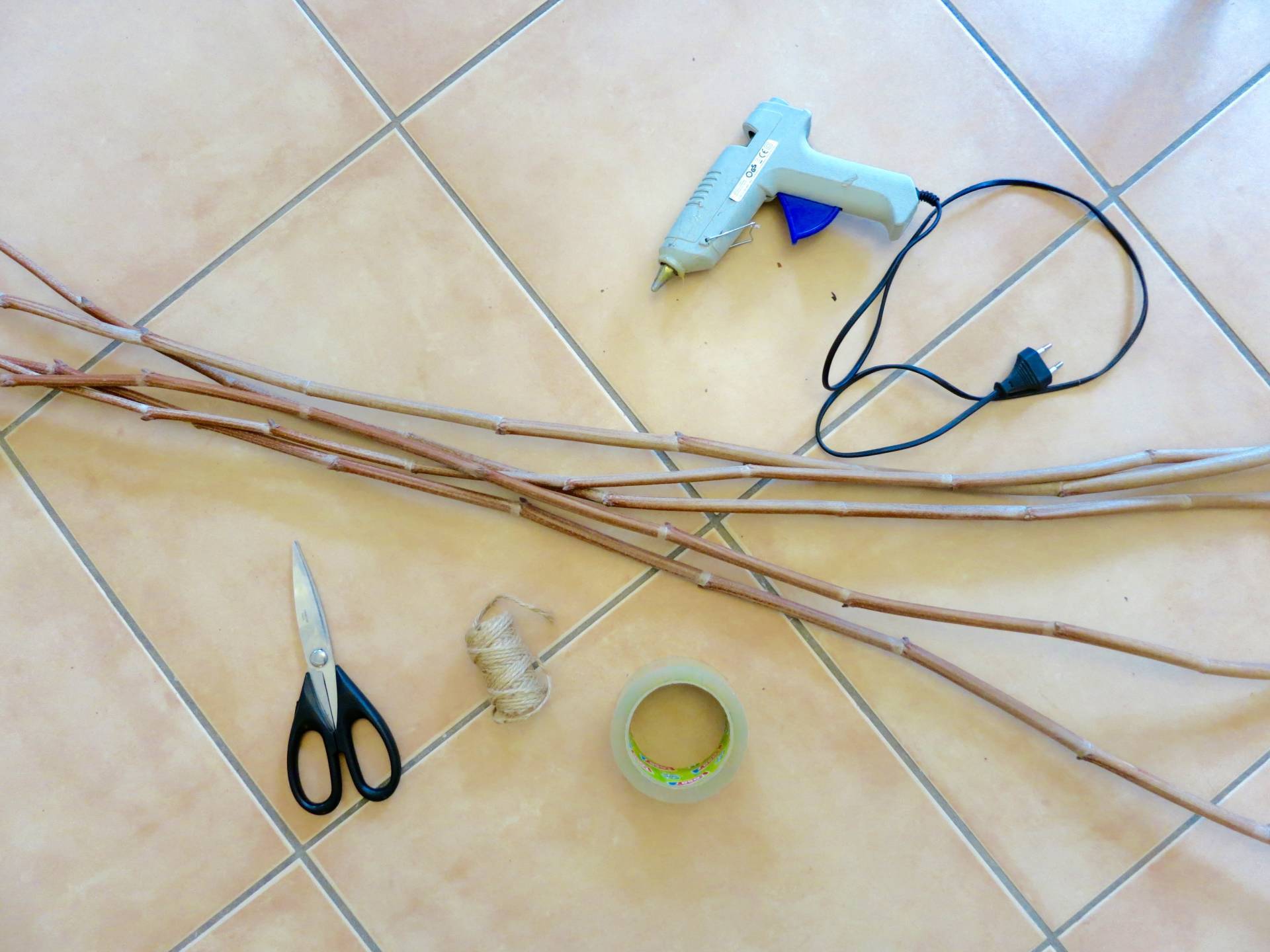
Simple Materials Build. A pared-down version using inexpensive hardware-store dowels and a painter's drop cloth. The drop cloth is already hemmed and heavy enough to hang well, so you can wrap it, clip it with clothespins, or tie it directly to the poles without a single stitch.
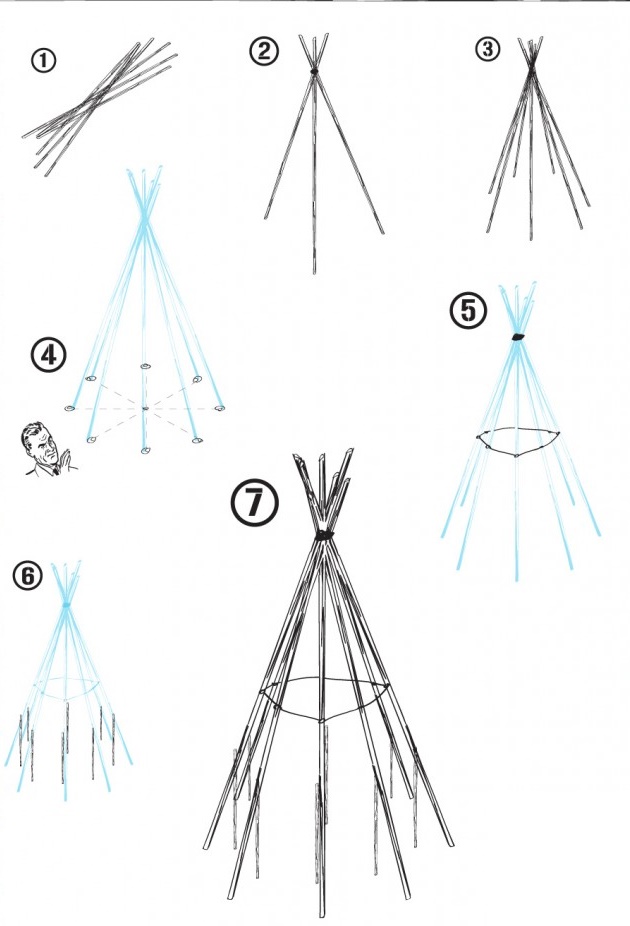
How to Make a Teepee (Step by Step). A full walk-through of the classic method — measuring the poles, tying the top lashing, and spacing the legs evenly so the cone stands square. Master this once and every other teepee here becomes a simple variation.
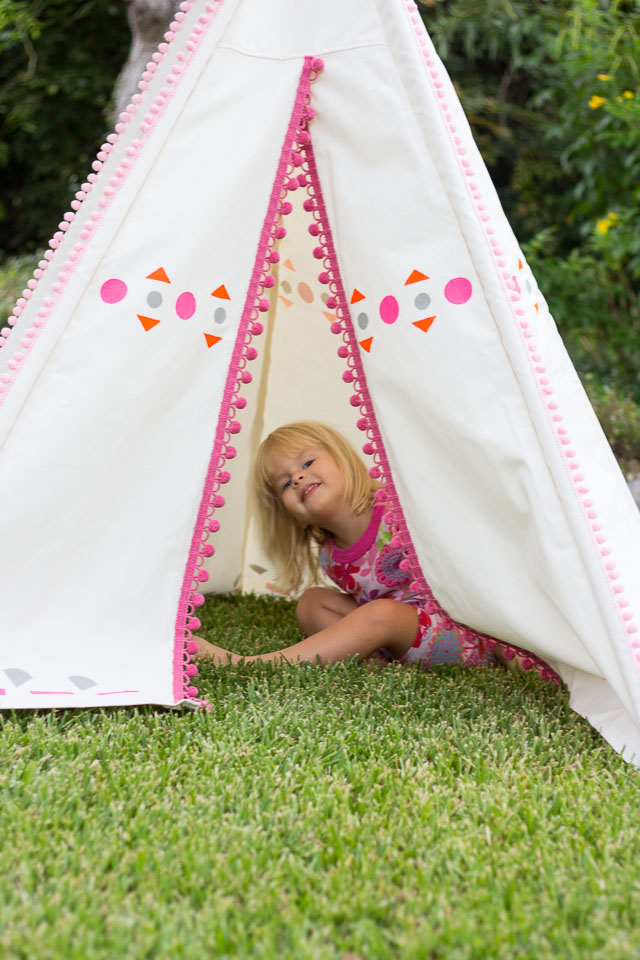
Canvas Drop-Cloth Teepee. A drop cloth is the secret weapon of no-sew teepees: cheap, wide, pre-hemmed, and easy to stencil or dip-dye for a custom look. Wrap it around the frame and fold back one panel for the door — no cutting required if you don't want to.
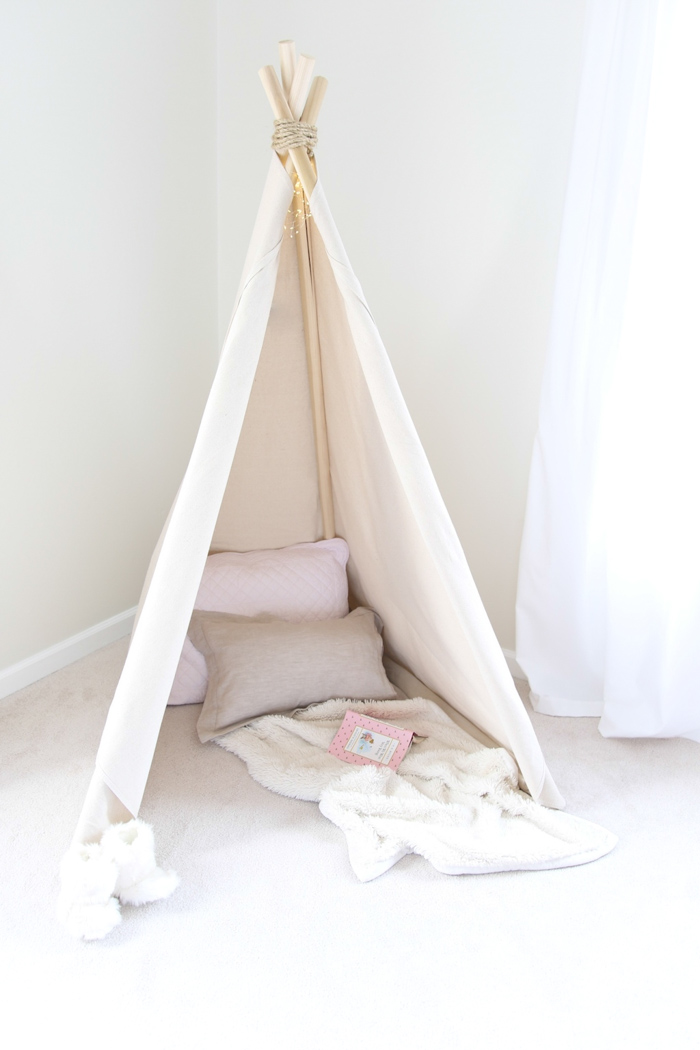
Three-Stick Toddler Teepee. About as easy as a teepee gets: tie three equal-length sticks near the top, spread the legs, and wrap a blanket around them. It's simple enough that older kids can help build their own, and it comes apart just as fast for storage.
Wooden & pallet teepee frames
Sturdier, longer-lasting builds for makers who don't mind a drill and a saw. These use dimensional lumber or reclaimed pallet wood for a frame that holds up to years of hard play.
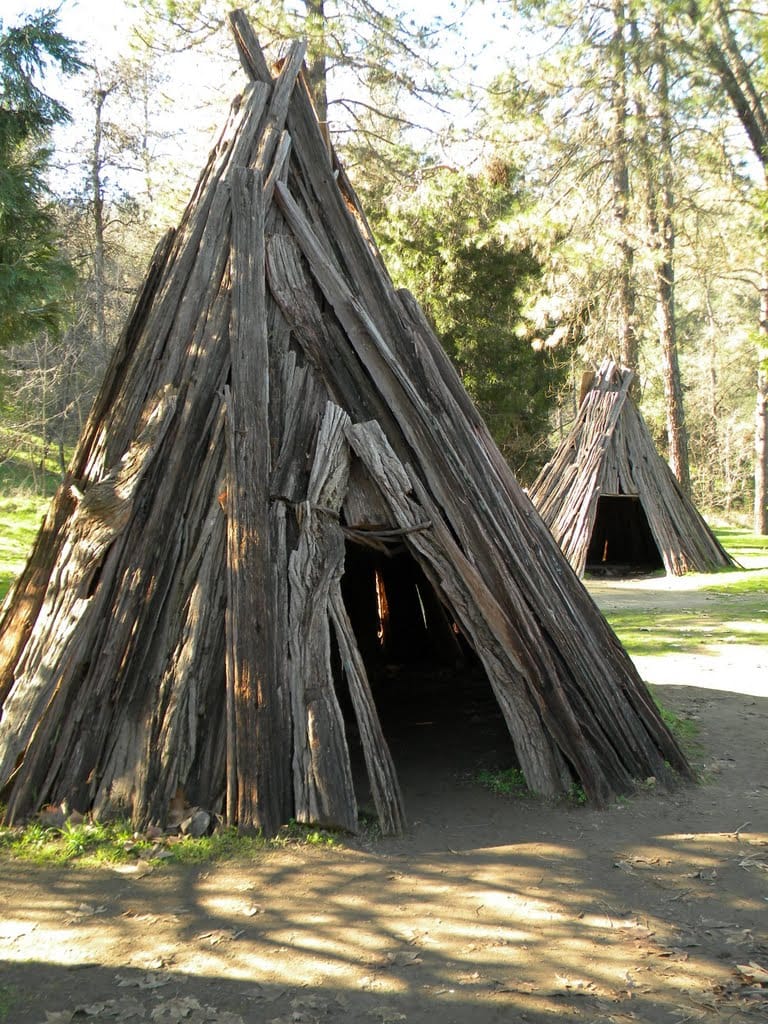
Wooden Frame Teepee. Built from square lumber or unused fallen branches, a wooden teepee is cheap, strong, and far more durable than a lashed-dowel version. Drill matching holes near the tops of the poles, run a bolt or dowel through to hinge them, and the frame folds flat when you're done.
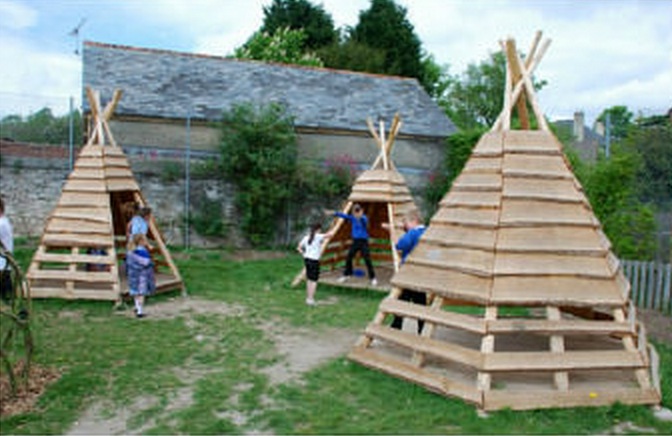
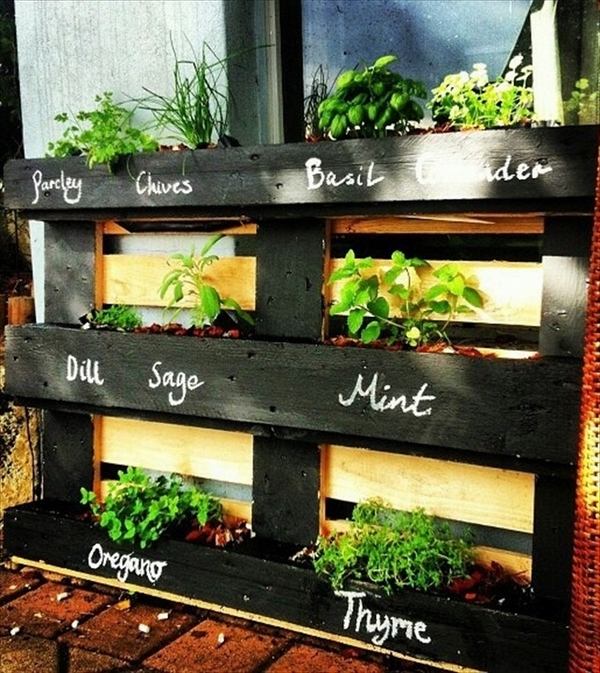
Pallet-Wood Teepee. A great use for scrap wood and old pallets — dismantle a pallet, cut the slats to length, and lash or bolt them into a frame the kids can help finish. If you like reclaimed-wood projects, our wood pallet planter and pallet shoe rack plans use the same free material.
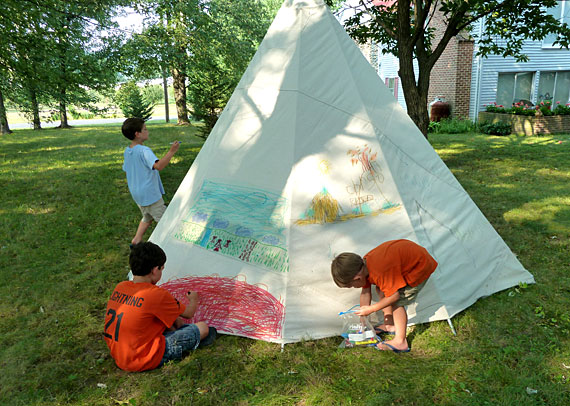
Five-Panel Teepee Tent. A tidy, symmetrical frame of five poles that gives the cover clean, even panels to wrap around. The five-sided shape stands more steadily than a three- or four-pole version and leaves an obvious opening for the door.
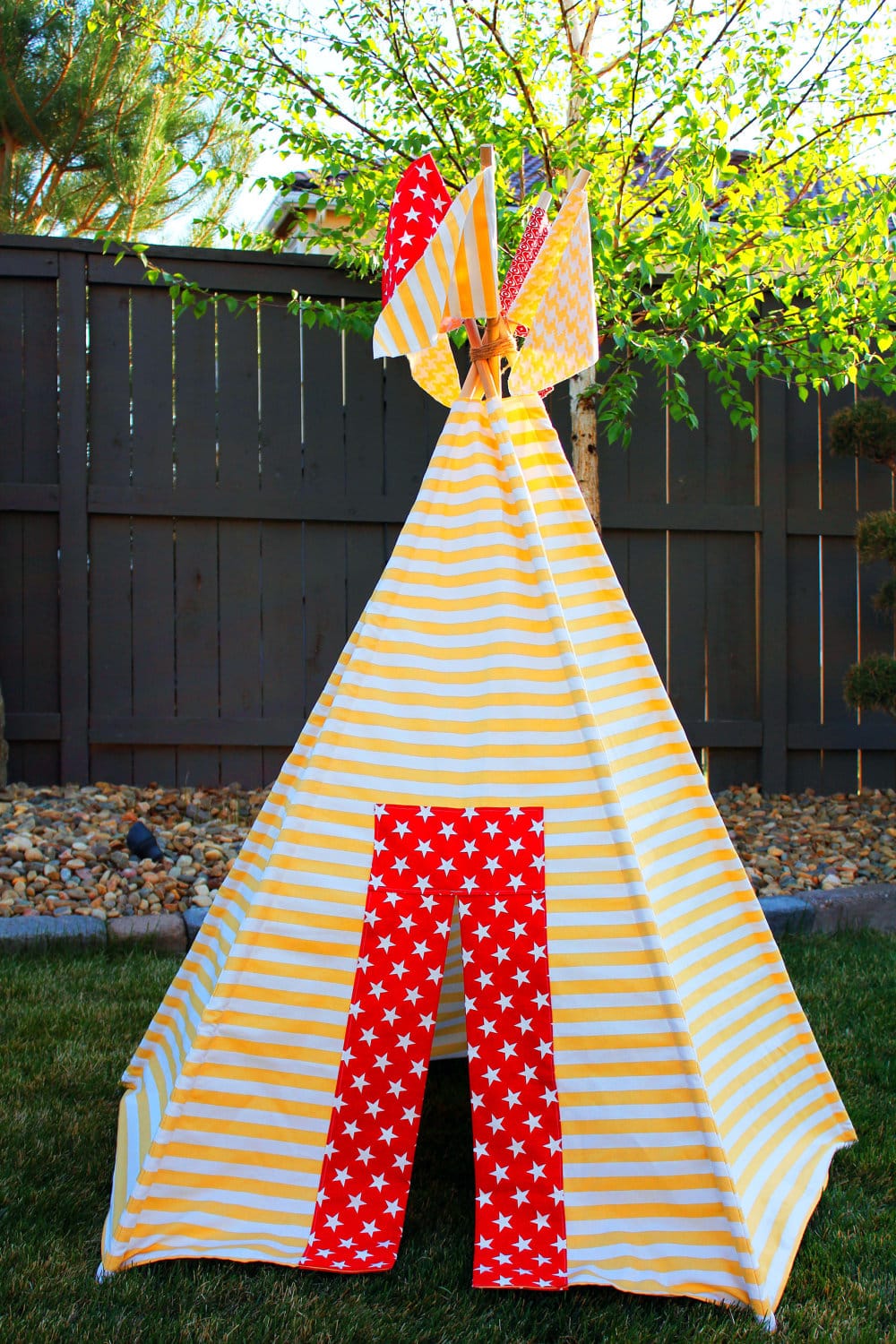
Bolt-and-Hinge Teepee. A build that runs a single bolt through all the poles so the whole teepee pivots open and folds shut like an umbrella. It's the most portable wooden design here — pop it up in the living room, fold it flat, and slide it behind the couch.
Indoor play teepees & reading nooks
The cozy corner every kid wants. These indoor teepees are built for softness and quiet — string a few lights inside, pile in pillows and a blanket, and you've made a reading nook.
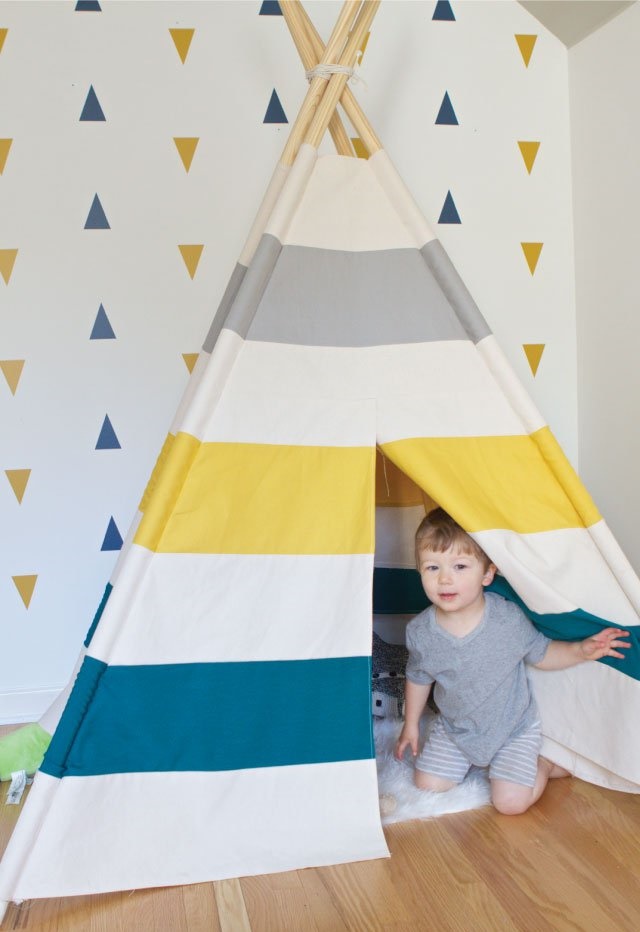
Playroom Teepee. A soft, fabric-covered teepee sized for a corner of the playroom, with a folded-back door and a rug and cushions inside. Add a set of battery fairy lights up the inside of the poles for a glow that makes it feel like a real little house.
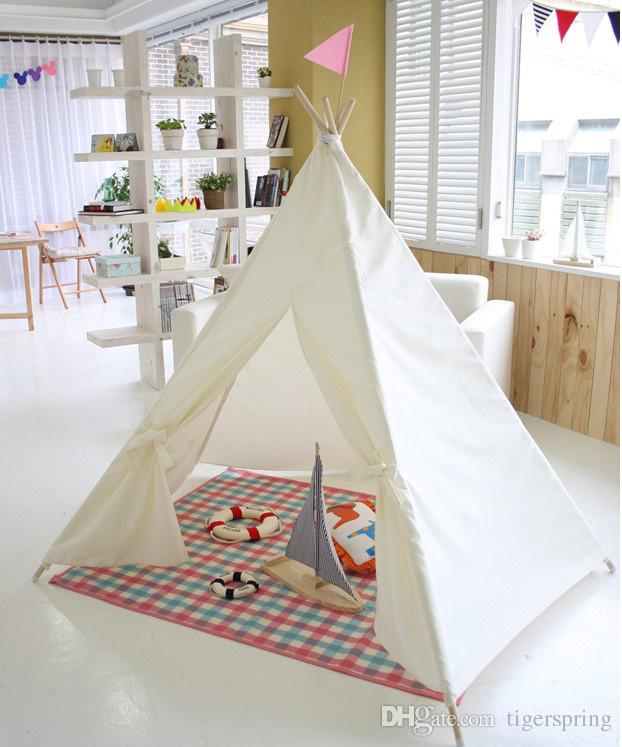
Indoor Reading Teepee. A lightweight indoor build meant to stay up year-round as a quiet reading spot. Line the floor with a soft mat and toss in a couple of floor pillows — for the doorway, a length of light fabric or a pair of curtain tie-backs dresses the opening beautifully.
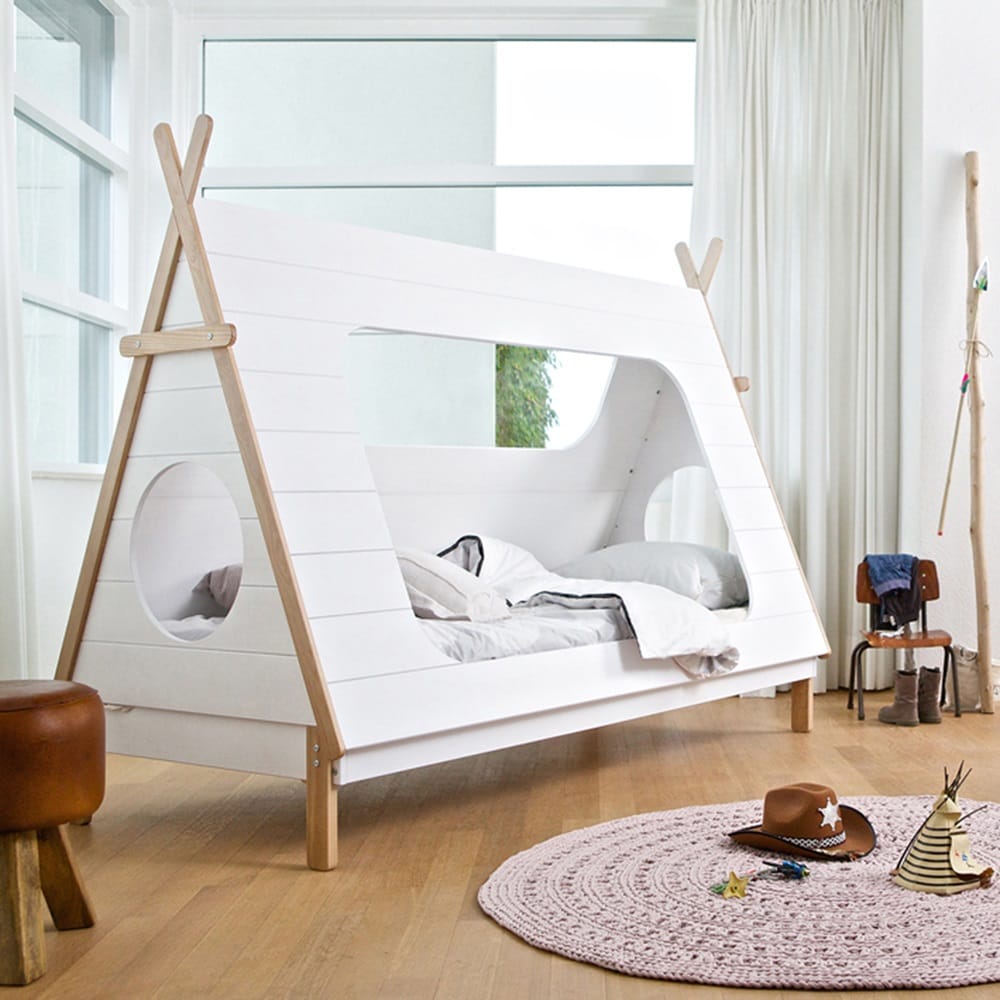
Fabric Teepee Tutorial. A more finished indoor teepee with a sewn or hem-taped cover that slips over the frame like a slipcover. If you're comfortable working with fabric but not sewing, the same iron-on hem-tape tricks from our no-sew curtains guide will finish the panels without a machine.
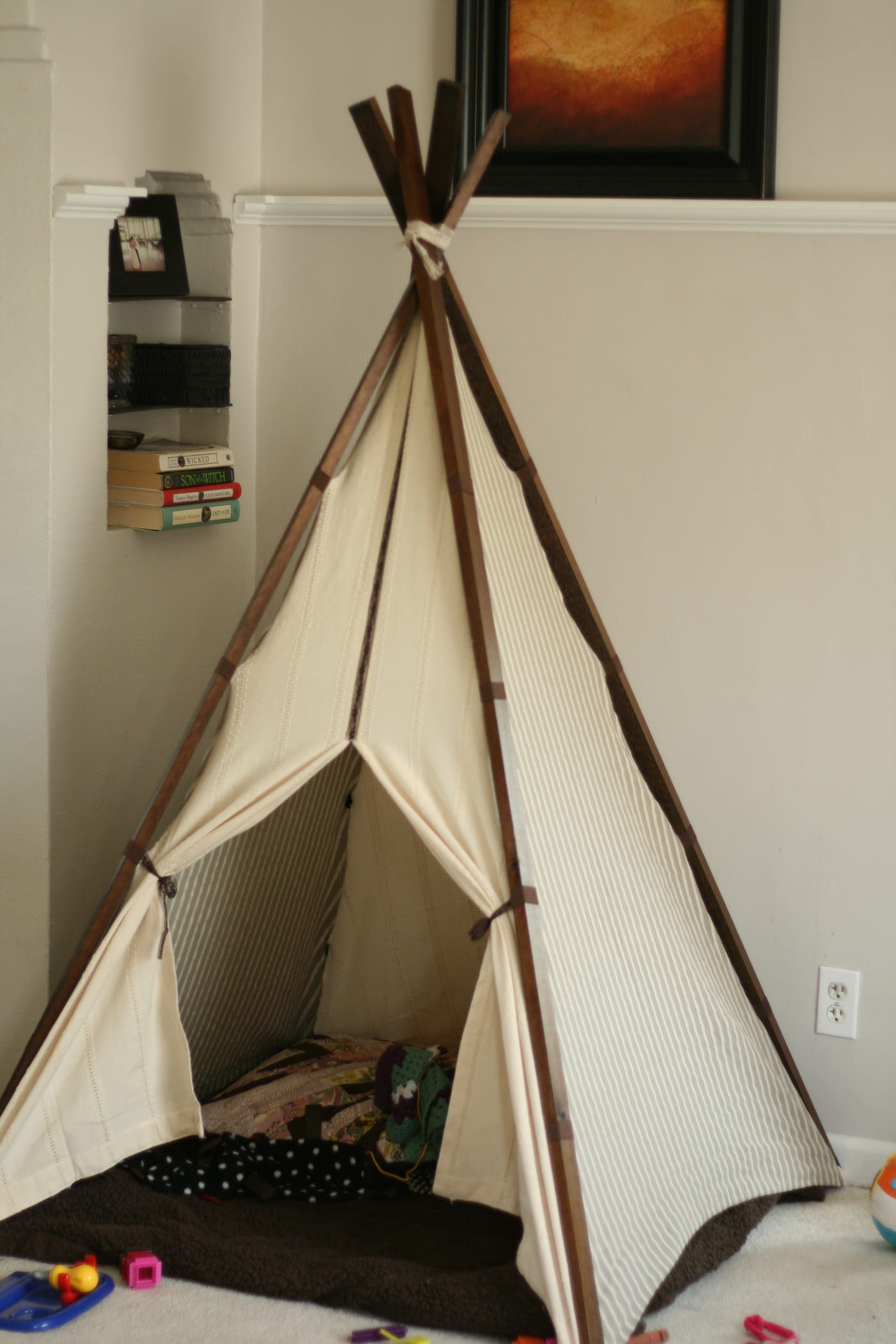
Modern Minimalist Teepee. A clean, contemporary take in neutral canvas with slim wooden poles — the kind of teepee that actually looks good left standing in a styled kids' room. Simple, undyed fabric keeps it looking intentional rather than cluttered.
Nursery & toddler teepees
Softer, smaller, and lower to the ground — teepees scaled for babies and toddlers, made from the gentlest fabrics and rounded, splinter-free poles.
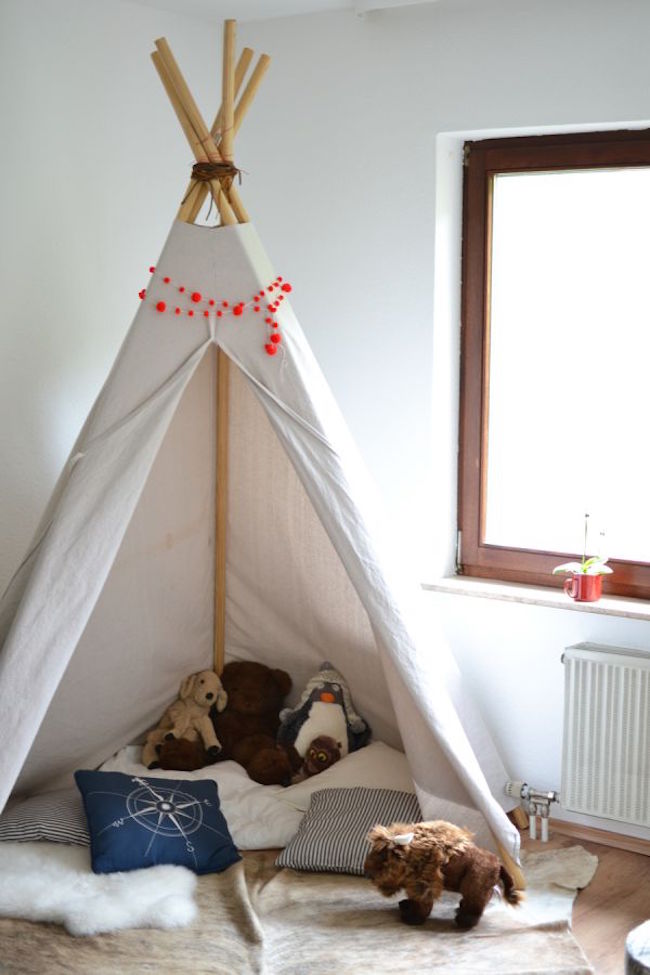
Nursery Teepee. A small, soft teepee in muslin or cotton that doubles as a photo-prop corner and a first play space. Sand the poles smooth and keep it low so it's safe for a crawling baby to explore.
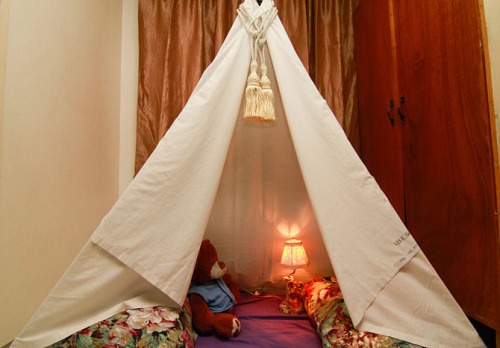
Baby Canopy Teepee. A dainty canopy-style teepee that hangs a little softer and lighter, perfect for a nursery reading corner. Drape a gauzy fabric over the frame and let it puddle at the base for a soft, tented look.
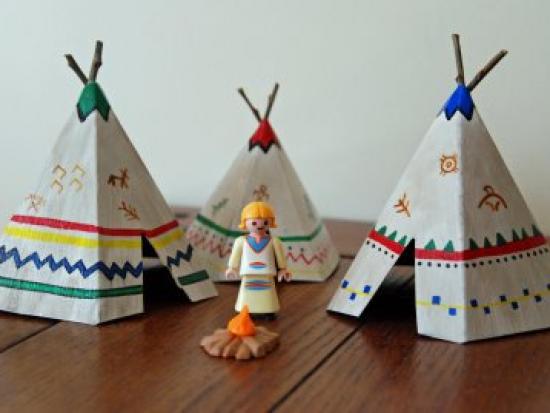
Kid-Decorated Teepee. A plain canvas teepee the kids paint or stencil themselves — a rainy-day craft that ends with a real, usable tent. Fabric markers, stamps, and stencils all work on a canvas cover.
Garden & outdoor teepees
Not every teepee is for playing in. These outdoor builds hold up climbing beans and peas, shade a corner of the yard, or shelter the garden — practical structures with the same simple cone frame.
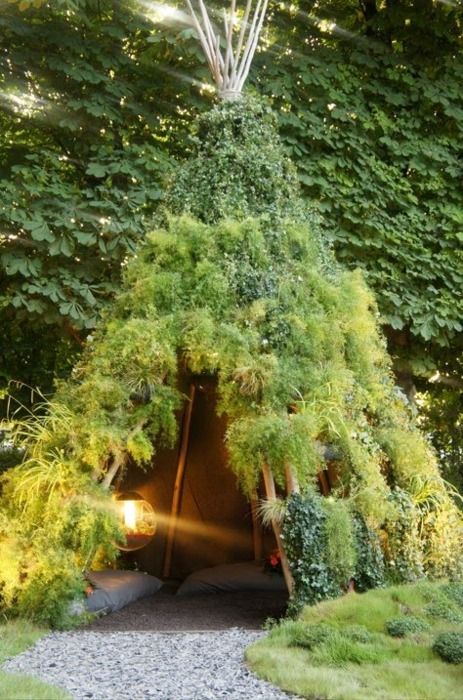
Bean & Pea Teepee. If you've grown any vining plant, you know how much they love a sturdy frame to climb. A garden teepee of bamboo canes or branches is a cheap, beautiful way to support beans, peas, and sweet peas — and it doubles as a shady hideout for kids once the vines fill in.
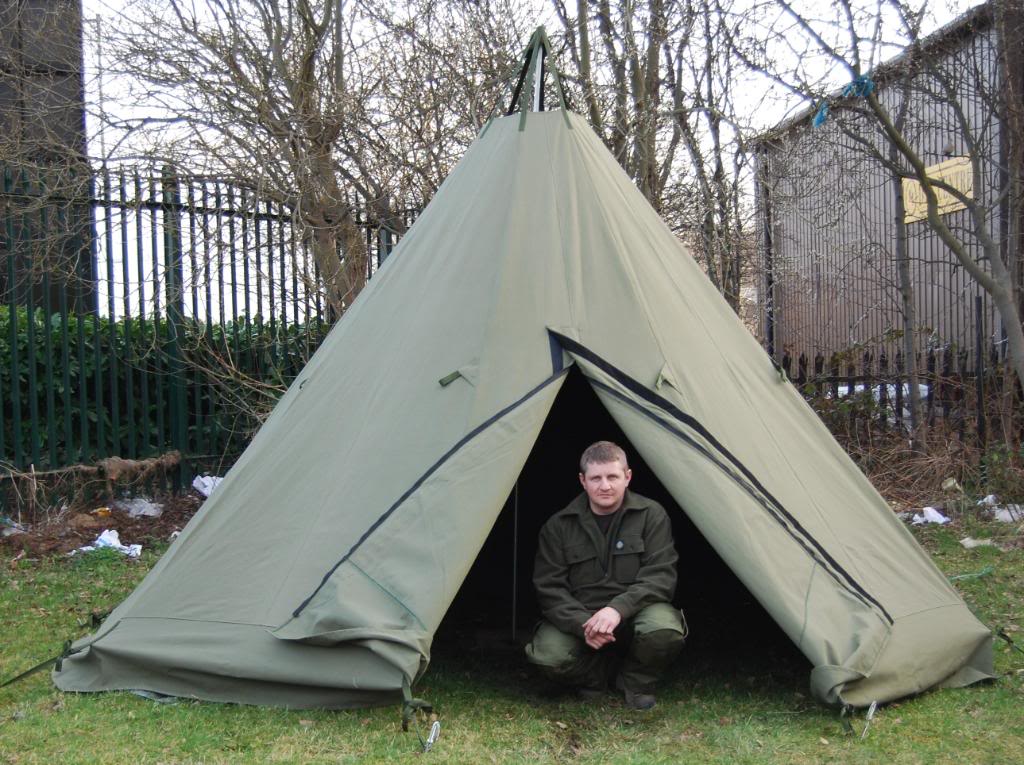
Tarp Teepee. Cost-effective and genuinely weatherproof, a tarp-covered teepee stands up to wind and rain far better than fabric. It's the design to reach for if the teepee is going to live outside, and it packs down small enough to carry to the campsite.
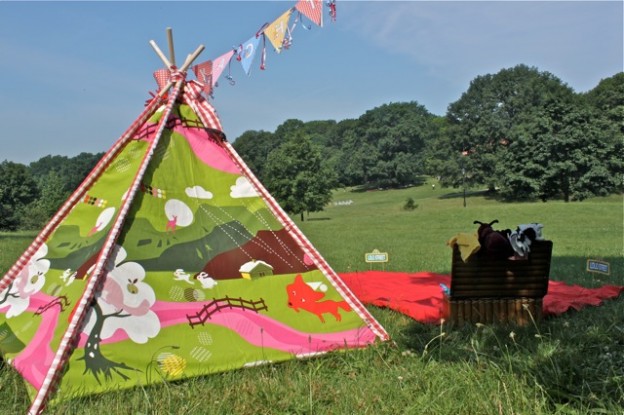
Backyard Play Teepee. A larger outdoor build meant to stay up all summer as a backyard fort. Use pressure-treated or sealed poles and a weather-resistant cover so it survives the season.
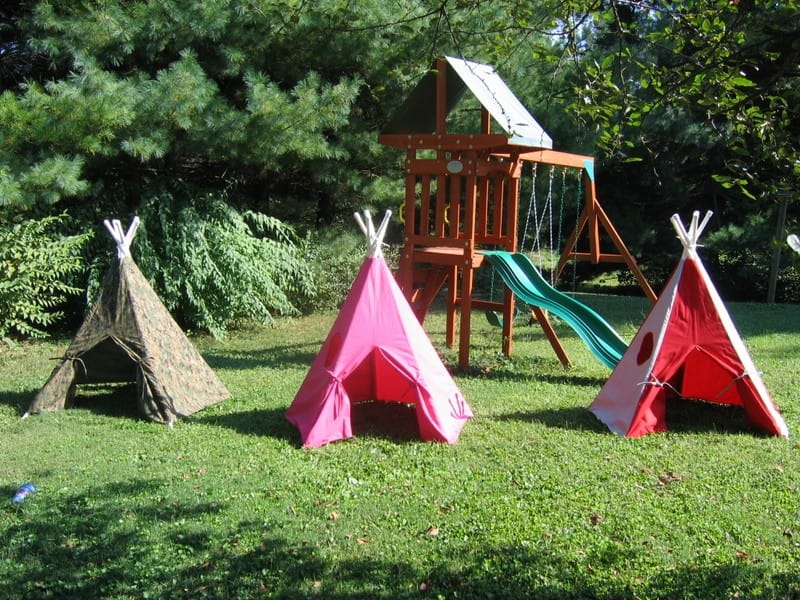
Camping Teepee. A scaled-up, sturdier teepee you can actually sleep in, built on the same principle as the play versions but with a proper floor footprint and a weather flap. A fun, ambitious build for an adventurous family.
Specialty & novelty teepees
The creative outliers — teepees that aren't play tents at all. A birdhouse, a dog den, a bed canopy, and a lamp, all wearing the same friendly cone shape.
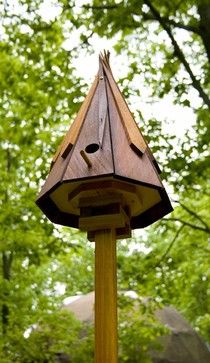
Teepee Birdhouse. Layered cedar boards stacked into a little teepee-shaped birdhouse — no paint needed, since the cedar weathers to a handsome antique gray. A charming garden accent that gives the backyard birds a home.
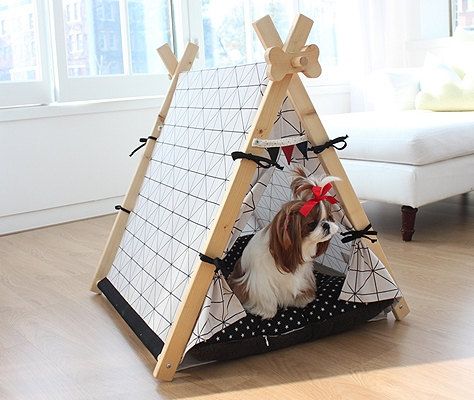
Teepee Dog House. A teepee den for the family dog, wrapped in a washable, water-resistant fabric (pets and tents being what they are). Choose a bright, sturdy cover and pad the inside with a cushion.
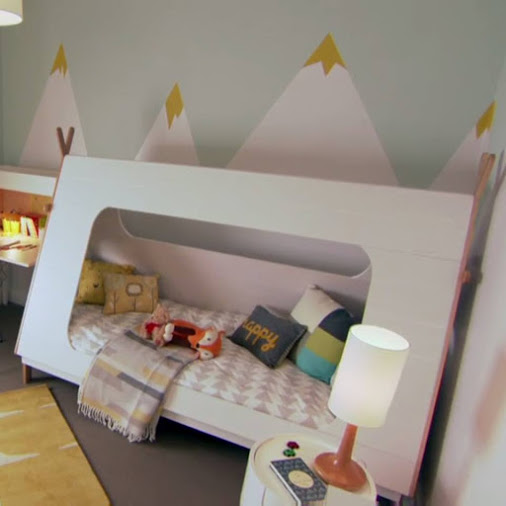
Teepee Bed. The showstopper: a full wooden bed frame built into a teepee shape, complete with a wood finish, cut-out windows, and star decals for that campout-every-night feel. Some versions add a pull-out trundle for sleepovers. Pair it with a handmade dollhouse bookcase for a complete themed room.
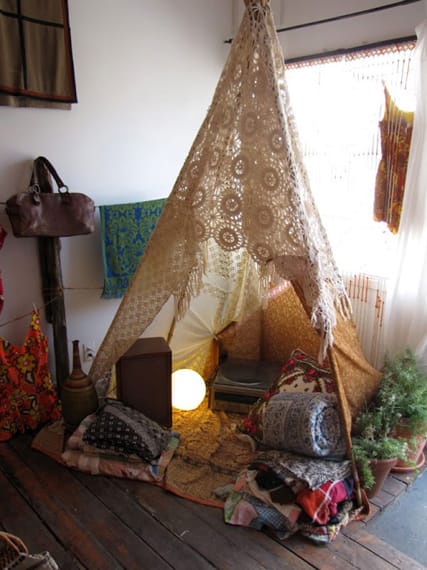
Teepee Lamp. A tiny decorative teepee built over a light source for a soft, tented night-light glow. A quick, low-stakes project that adds a warm accent to a themed kids' room.
Tips for building a teepee that lasts
- Cut all your poles to the same length. Even legs are what make the cone stand square instead of leaning. Measure twice, and lash or bolt them at a consistent height from the top.
- Splay the base wide for stability. The wider the legs spread at the bottom, the more stable the teepee. For play tents, a base as wide as the poles are tall gives a sturdy, tip-resistant stance.
- Use a drop cloth for the cover. Canvas painter's drop cloths are pre-hemmed, wide, cheap, and take paint or dye beautifully — the single best no-sew fabric for a teepee.
- Sand every pole smooth. Splinters are the enemy of a kids' tent. Sand the poles and round the ends before assembly, especially for nursery and toddler builds.
- Make it foldable. A single bolt or a hinge point near the top lets the whole frame collapse flat for storage — the difference between a teepee that stays up for years and one that gets thrown out because there's nowhere to keep it.
More DIY projects to build next
Once the teepee is standing, keep the build going. Dress the playroom windows with easy no-sew curtains and matching curtain tie-backs, put the kids' books somewhere charming with a dollhouse bookcase, and turn leftover pallet wood into a wood pallet planter or a pallet shoe rack. Every one uses the same scrap materials and weekend-project spirit that make a teepee so satisfying to build.
Frequently asked questions
How do you make a simple teepee for kids?
The easiest method needs no sewing at all: gather five or six wooden dowels or garden stakes, tie them together with rope about a foot from the top, and splay the bottoms into a circle. Wrap a canvas drop cloth or an old bed sheet around the frame, fold back one panel for the door, and secure it with clips or ties. The whole build takes well under an hour.
What materials do I need to build a teepee?
For a basic play teepee you need five or six poles (wooden dowels, bamboo canes, PVC pipe, or straight branches, roughly 5–6 feet long), a length of rope or twine for the top lashing, and fabric for the cover — a canvas drop cloth is ideal. Sturdier builds add a drill, a bolt for the hinge point, and pressure-treated or sealed lumber for outdoor use.
How tall should a kids' teepee be?
Most children's play teepees stand about 5 to 6 feet tall, which is roomy enough for kids to sit up comfortably inside and for a parent to duck in. The base should spread nearly as wide as the teepee is tall for stability. For toddlers and nursery corners, scale it down to 4–5 feet and keep it low and lightweight.
Can I build a teepee without sewing?
Absolutely — most of the teepees here are completely no-sew. A pre-hemmed canvas drop cloth or a flat bed sheet wraps around the frame and is held with clips, ties, or iron-on hem tape, so you never touch a sewing machine. The same fusible-tape tricks used for no-sew curtains work perfectly for finishing a teepee cover's edges.
Grab a bundle of dowels and a drop cloth and start with a simple no-sew play teepee this weekend — you'll have a hideaway standing by the afternoon. When it's up, our no-sew curtains and dollhouse bookcase plans are ready to finish out the rest of the kids' room.